
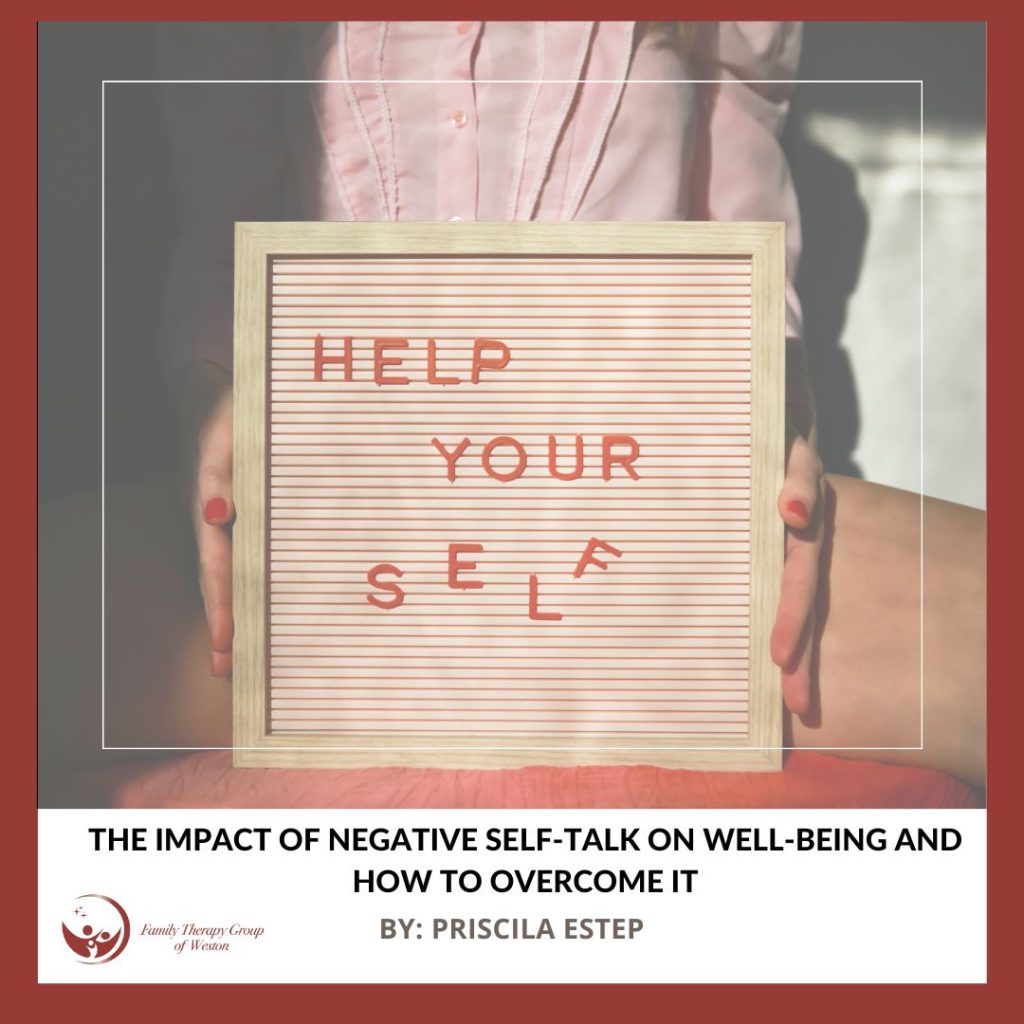
The Impact of Negative Self-Talk on Well-Being and How to Overcome It
Written by: Priscila Estep
Negative self-talk—the internal dialogue that criticizes, doubts, or belittles oneself—is a common experience. While occasional self-reflection is natural, persistent negative self-talk can significantly impact mental and physical health. Understanding its effects and learning strategies to counteract it can lead to improved well-being.
The Detrimental Effects of Negative Self-Talk
Engaging in negative self-talk can have several adverse effects:
- Mental Health Issues: Consistent negative self-talk is linked to increased risks of depression, anxiety, and other mental health disorders.
- Decreased Self-Esteem: Persistent self-criticism can erode self-worth and confidence.
- Physical Health Problems: Chronic stress from negative thinking can lead to sleep disturbances, digestive issues, and even cardiovascular problems.
- Impaired Relationships: Negative self-perception can affect interactions with others, leading to social withdrawal or conflicts.
Strategies to Combat Negative Self-Talk
Fortunately, there are effective methods to challenge and change negative self-talk patterns:
- Awareness and Identification: Keep a journal to track negative thoughts and identify recurring themes. Recognizing these patterns is the first step toward change.
- Cognitive Restructuring: Challenge negative thoughts by questioning their validity and replacing them with more balanced perspectives. For instance, change “I’m a failure” to “I didn’t succeed this time, but I can learn and improve.”
- Practice Self-Compassion: Treat yourself with the same kindness and understanding as you would a friend. Self-compassion exercises have been shown to increase happiness and reduce depression.
- Positive Affirmations: Use daily affirmations to reinforce positive beliefs about yourself. Repeating statements like “I am capable” can gradually shift your mindset.
- Mindfulness and Meditation: Engage in mindfulness practices to become more aware of your thoughts and detach from negative thinking patterns. Techniques like meditation and deep breathing can help calm the mind.
- Seek Professional Support: If negative self-talk is overwhelming, consider consulting a mental health professional. Therapy can provide personalized strategies and support to address underlying issues.
Conclusion
Negative self-talk can significantly impact your mental and physical health. By recognizing its effects and implementing strategies like cognitive restructuring, self-compassion, and mindfulness, you can transform your inner dialogue and enhance your overall well being. Remember, change takes time, but with consistent effort, a more positive and supportive inner voice is achievable. If you need extra support through this transition, give us a call to schedule an appointment today at 954.769.1285


Recent Posts




Written by Priscila Estep

From Priscila's bio...
“In sessions, Prisicila embraces Cognitive Behavioral Therapy (CBT) to help clients examine the connections between thoughts, emotions, and behavior. Clients will learn to identify and overcome cognitive distortions or "thinking traps," such as all-or-nothing thinking, catastrophizing, and faulty assumptions. Prisicila also integrates mindfulness and grounding techniques to encourage non-judgmental observation and focus on the present moment.”