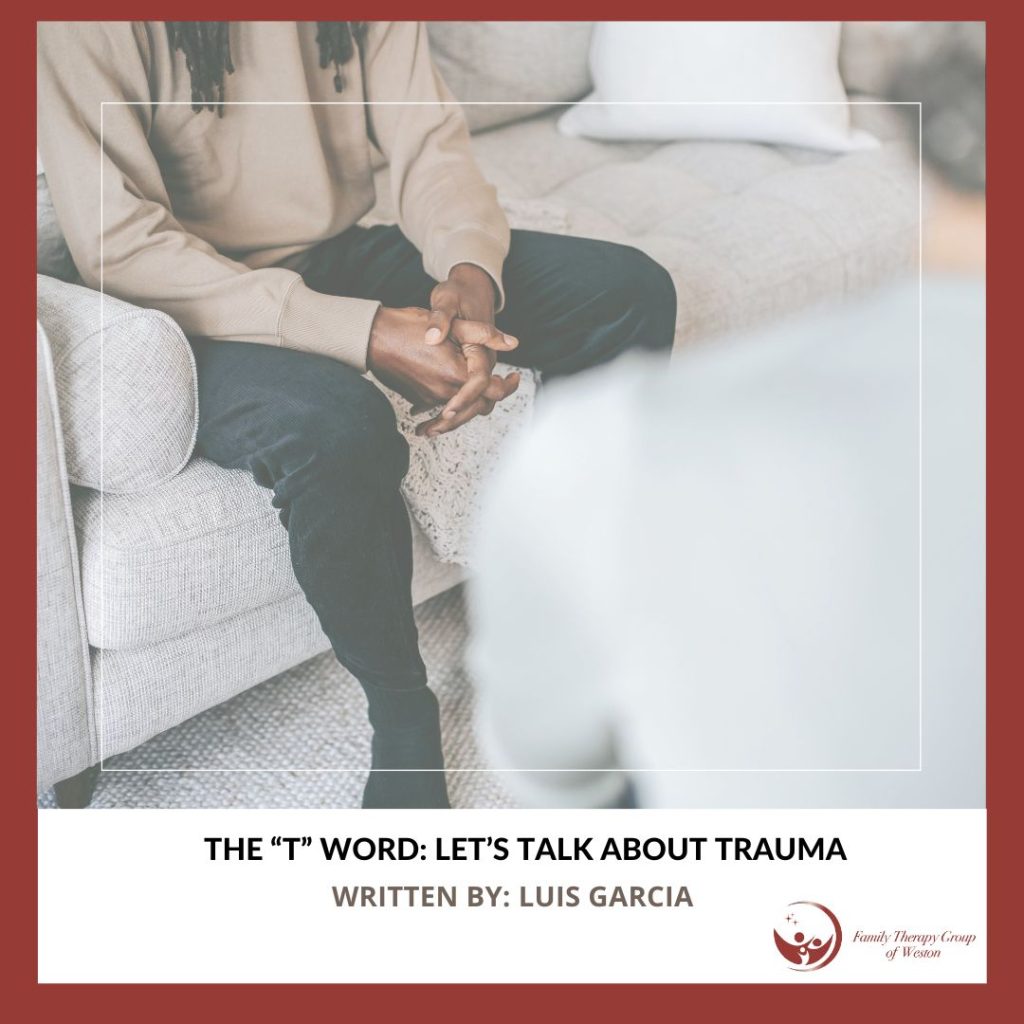
The “T” Word: Let’s Talk About Trauma
Written by Luis Garcia
When most people hear the word trauma, they think of big events like accidents, abuse,
war, or disasters. Those experiences can absolutely be traumatic. But trauma isn’t only about what happened, it’s also about what happened inside of us as a result.
The word itself comes from the Greek for “wound” and that’s what trauma is: an invisible
wound.
As Dr. Gabor Maté explains,
“It is not what happens to you; it is what happens inside you as a result of what happens to you.”
These wounds can show up in many ways: feeling cut off from safety, struggling to trust
others, carrying guilt or shame, feeling numb, constantly on edge, or using things like substances, food, or work just to get by.
Big “T” and Little “t” Trauma
Not all trauma looks the same.
- Big T trauma: Life-altering events such as violence, serious accidents, or abuse. Imagine a large boulder suddenly dropped into a bucket; the weight is obvious and overwhelming.
- Little t trauma: Smaller but repeated hurts like criticism, neglect, constant stress, or disappointments. At first, one pebble may not seem heavy, but over time enough of them can weigh you down just as much as a boulder. Both matter. Both deserve care.
Why Childhood Matters
Many struggles people face as adults connect back to experiences from childhood. Growing up in a home with conflict, neglect, or instability can leave lasting marks on both the body and mind.
Research shows that the more of these early adverse experiences we have, the higher our risk for struggles later in life like anxiety, depression, substance use, or difficulty in relationships. Early wounds also shape how safe we feel in the world and how we respond to stress.
If you’ve ever wondered why certain patterns like pushing people away, turning to substances, or always feeling “on edge” are so hard to break, those early experiences may be part of the reason.
The good news: patterns can be understood, healed, and reshaped.
Trauma as Disconnection
At its core, the brain wants to keep us safe. Sometimes, when something overwhelming happens, it protects us by shutting down or going numb. In the moment, that response helps. But over time it can get stuck, leaving us feeling disconnected from ourselves, our emotions, or even the people we care about.
This is what happens in trauma-related struggles like PTSD or Complex PTSD. Signs can include nightmares, flashbacks, being easily startled, difficulty trusting others, or feeling empty inside. These aren’t signs of weakness, they’re signs that your body and mind have been working hard to survive.
Growth Is Possible
“The cave you fear to enter holds the treasure you seek.” – Joseph Campbell
Thankfully, trauma doesn’t have to define your life.
Healing doesn’t mean “going back” to who you were before everything happened. It means becoming more grounded, connected, and resilient than before. It means creating a more unified internal family system by reconnecting the different parts of you.
Many people even discover new strengths after working through trauma, things like stronger relationships, a greater appreciation for life, and a renewed sense of purpose. This is called post-traumatic growth. Just like wounds on the body, trauma can leave scars. But scars can also be reminders of healing.
Final Thoughts
Talking about trauma can feel scary, but naming it is often the first step toward healing. If you see yourself in any of this, know that you don’t have to face it alone.
At Family Therapy Group of Weston, we walk alongside you as you process trauma, rebuild trust in yourself, and find new ways to live with meaning and connection. With approaches like EMDR and other trauma-informed therapies, healing is possible. Your trauma may be part of your story, but it doesn’t have to be the whole story. If you’re ready to take the next step, we’re here to support you.


Written by Luis Garcia

From Luis's bio...
Luis is especially passionate about helping clients break cycles of generational trauma and build healthier, more connected relationships. He often reminds clients that healing isn’t just about recovery—it’s about growth, resilience, and creating meaning in life’s journey. One of his guiding quotes is from Nietzsche: “He who has a why to live can bear almost any how.”