
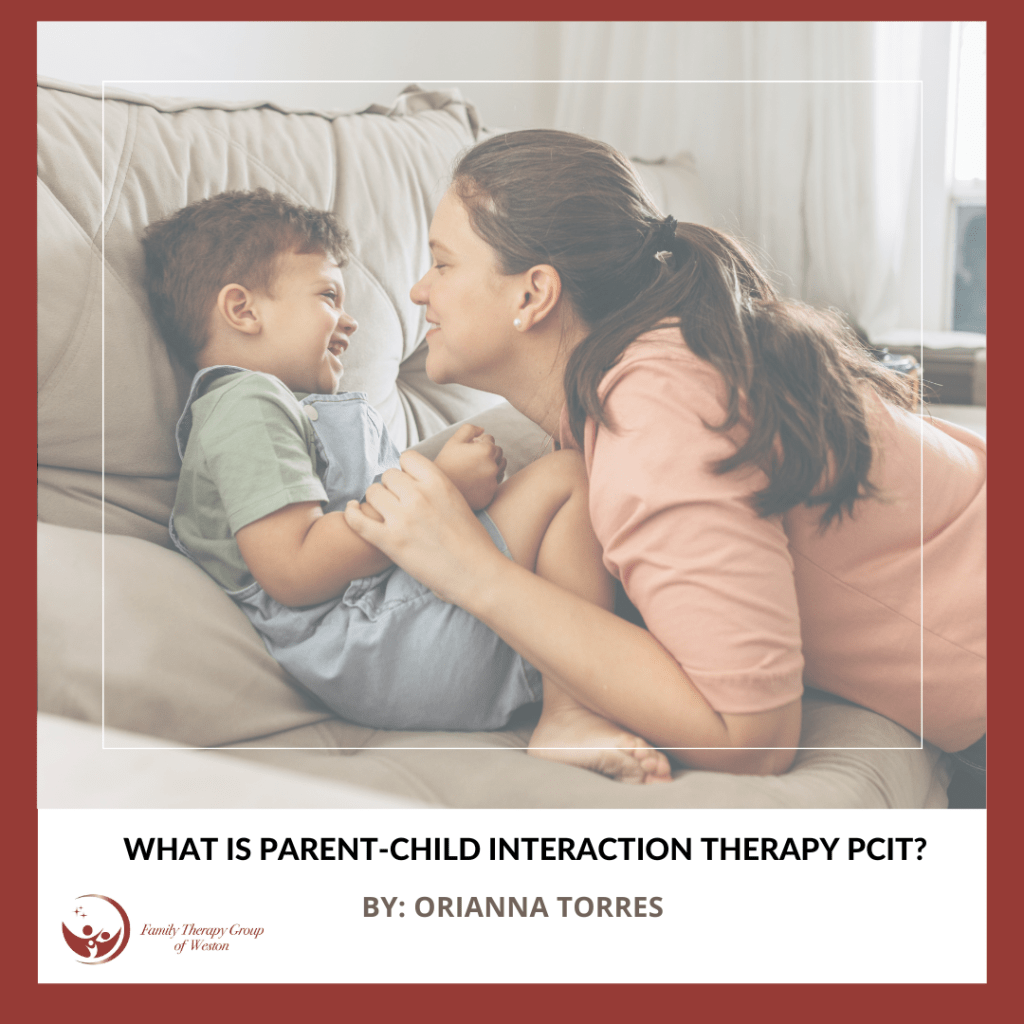
What is Parent-Child Interaction Therapy PCIT?
Written by: Orianna Torres
Parent-Child Interaction Therapy (PCIT)
Parent-Child Interaction Therapy (PCIT) is an evidence-based therapeutic approach designed to improve the quality of the parent-child relationship and address behavioral issues in young children. This therapy is particularly effective for children aged 2 to 7 who exhibit disruptive behaviors, such as aggression, non-compliance, and other emotional or behavioral challenges.
What is PCIT?
PCIT consists of two main components: Child-Directed Interaction (CDI) and Parent-Directed Interaction (PDI). The therapy aims to enhance parenting skills, promote positive interactions, and establish effective discipline strategies. The ultimate goal is to foster a secure attachment between parent and child while reducing behavioral problems.
Timing and structure of PCIT sessions
PCIT typically involves a series of sessions over several months. Treatment usually lasts between 12 to 20 sessions, depending on the child’s needs and progress. Each session is structured and generally lasts about 60 minutes. The sessions are divided into two primary phases:
-
Child-Directed Interaction (CDI):
During this phase, parents learn to focus on their child’s needs and reinforce positive behavior through play. This part of therapy helps parents develop skills to connect with their children in a nurturing manner.
-
Parent-Directed Interaction (PDI):
In this phase, parents are taught effective discipline techniques to manage inappropriate behaviors. This includes setting clear expectations and using consistent consequences for misbehavior.
Skill set and techniques used in PCIT
PCIT equips parents with practical skills to enhance their parenting efficacy. Here are key techniques utilized in each phase:
Child-Directed Interaction (CDI):
-
Praise:
Parents are encouraged to frequently praise their child for positive behaviors. For example, saying, “Great job sharing your toys!” reinforces desired behavior.
-
Reflective listening:
This involves acknowledging what the child says, promoting open communication. For instance, if a child says, “I built a big tower,” a parent might respond, “You built a big tower! That looks awesome!”
-
Imitation:
Parents are encouraged to mimic their child’s play actions. If a child is playing with blocks, the parent might join in by building alongside them.
-
Behavioral Description:
Parents describe their child’s actions during play to help them develop language skills. For example, “You are stacking the blocks so high!”
Parent-Directed Interaction (PDI):
-
Clear instructions:
Parents learn to give direct and clear commands. For instance, instead of saying, “Be good,” a parent might say, “Please pick up your toys.”
-
Time-outs:
Effective time-out strategies are taught for managing inappropriate behavior. (I have an entire diagram of what this looks like… it’s quite long so I’m not sure how to break it down too effectively).
-
Consistency:
Parents are guided on maintaining consistency in rules and consequences, which is crucial for effective discipline. Mainly through the use of consistent discipline and active ignoring.
Duration and effectiveness of treatment
The length of PCIT can vary based on individual circumstances, but most families complete treatment within 3 to 6 months. The therapy’s structured nature, combined with live coaching and feedback, significantly increases its effectiveness. Research has shown that PCIT can lead to improvements in child behavior, reduced parenting stress, and enhanced parent-child relationships. This type of evidence based treatment has been around for 40+ years! Very very effective!
Parent-Child Interaction Therapy is a powerful tool for families struggling with behavioral challenges. By focusing on both positive interactions and effective discipline techniques, PCIT helps foster healthier relationships and promote emotional well-being. The structured sessions, clear skill sets, and hands-on coaching create an engaging environment where parents can learn and grow alongside their children.







Written by Orianna Torres

From Orianna's bio...
Orianna credits her own personal struggles with anxiety while growing up which helped her to understand how debilitating it can be. She feels that it guided her to be a better therapist and she is now more effective in helping her client’s find their footing again by standing alongside them until they can stand on their own. Her main goal is to provide a safe and comfortable environment filled with unconditional support, attentive listening and always making sure to remember important details of her client’s journey no matter how big or small they may be.
Her favorite quote is “It is an act of bravery to feel your feelings.”